17 Wolf Cut Hairstyle Ideas for 2026: Edgy, Effortless & Bold
The wolf cut refuses to fade because it does something most haircuts can’t: it gives you two hairstyles at once. A shag on top, a mullet at the back, and suddenly flat hair has movement, personality, and an edge that reads effortless instead of try-hard. If you’re browsing wolf cut hairstyle ideas for 2026, you’ll notice the trend has matured — the harsh, choppy versions of a few years ago have softened into wearable, salon-friendly variations that flatter more face shapes and hair textures. The modern wolf cut is less costume, more character: layers that lift the crown, ends that flick outward, and just enough disconnection to make air-dried hair look intentional.
This guide is for anyone craving change without sacrificing length — or anyone with a bob who’s ready for something bolder. Below you’ll find seventeen variations, from the classic curtain-bang version to curly, Korean-soft, and color-driven takes. Each one breaks down who it suits best, exactly what to ask your stylist for, and how to style it on a normal Tuesday morning. Bring a photo to your appointment (screenshots welcome), be honest about how much styling time you actually have, and prepare to fall in love with your texture.
1. The Classic Wolf Cut with Curtain Bangs
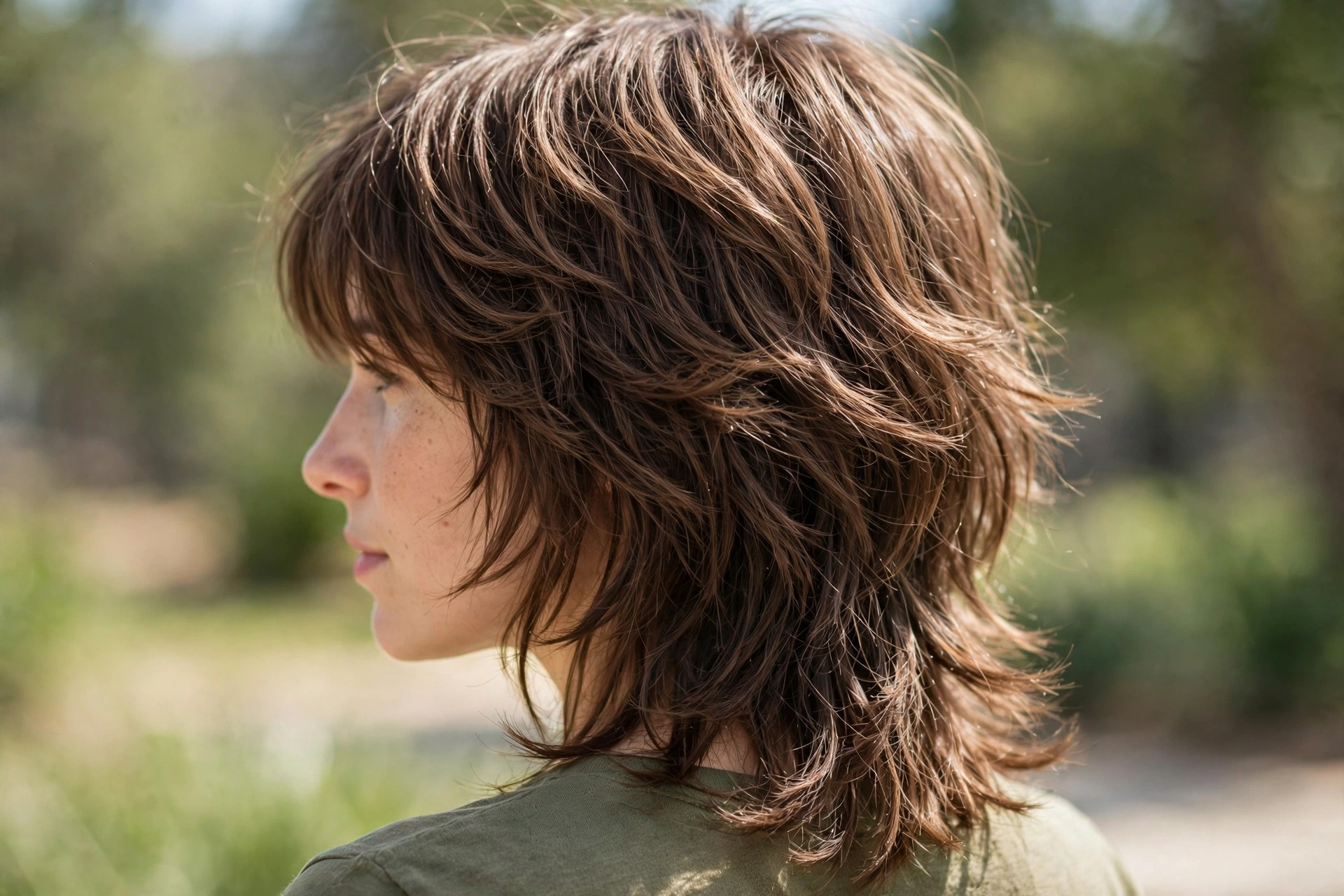
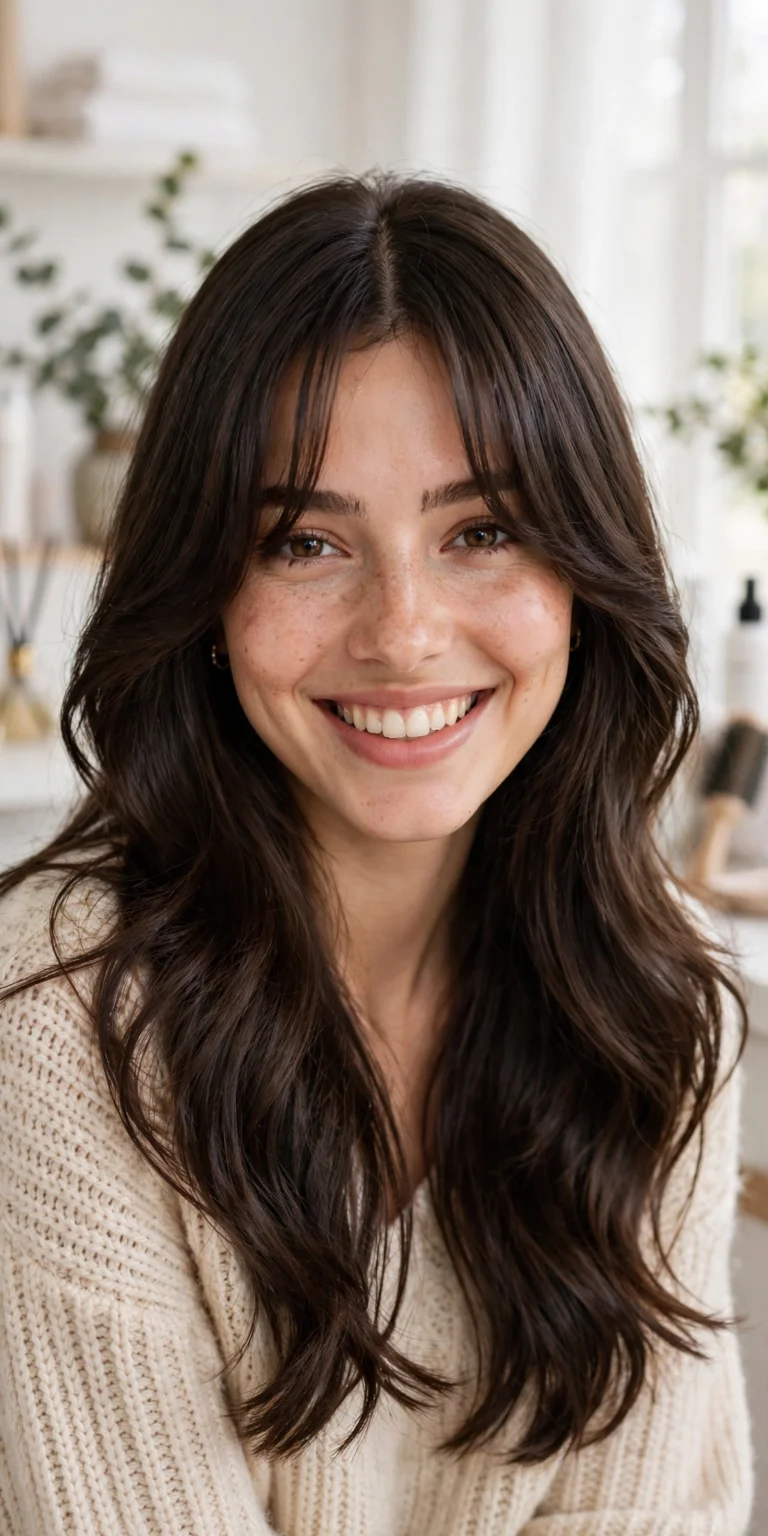
This is the blueprint every other wolf cut descends from: heavy layers through the crown that collapse into longer, wispier lengths at the back, finished with curtain bangs that part down the middle and melt into the face frame. It works beautifully on medium to thick hair because the weight of the hair holds the layers in place while still letting them flip and move. Oval, round, and heart-shaped faces all benefit — the curtain bangs slim wider cheeks, while the crown volume balances longer jawlines. It’s the most versatile entry point if you’re new to the cut.
At the salon, ask for disconnected layers with the shortest pieces sitting around the crown and cheekbones, and specify that you want the back length kept. Bring reference photos, because “wolf cut” means different things to different stylists. To style, rough-dry your hair upside down for root lift, then use a medium round brush to flick the face-framing layers outward. A pea-sized amount of texturizing cream scrunched into the ends adds separation without stiffness. Book trims every six to eight weeks to keep the layers from growing into a shapeless shag.
2. Soft Shaggy Wolf Cut
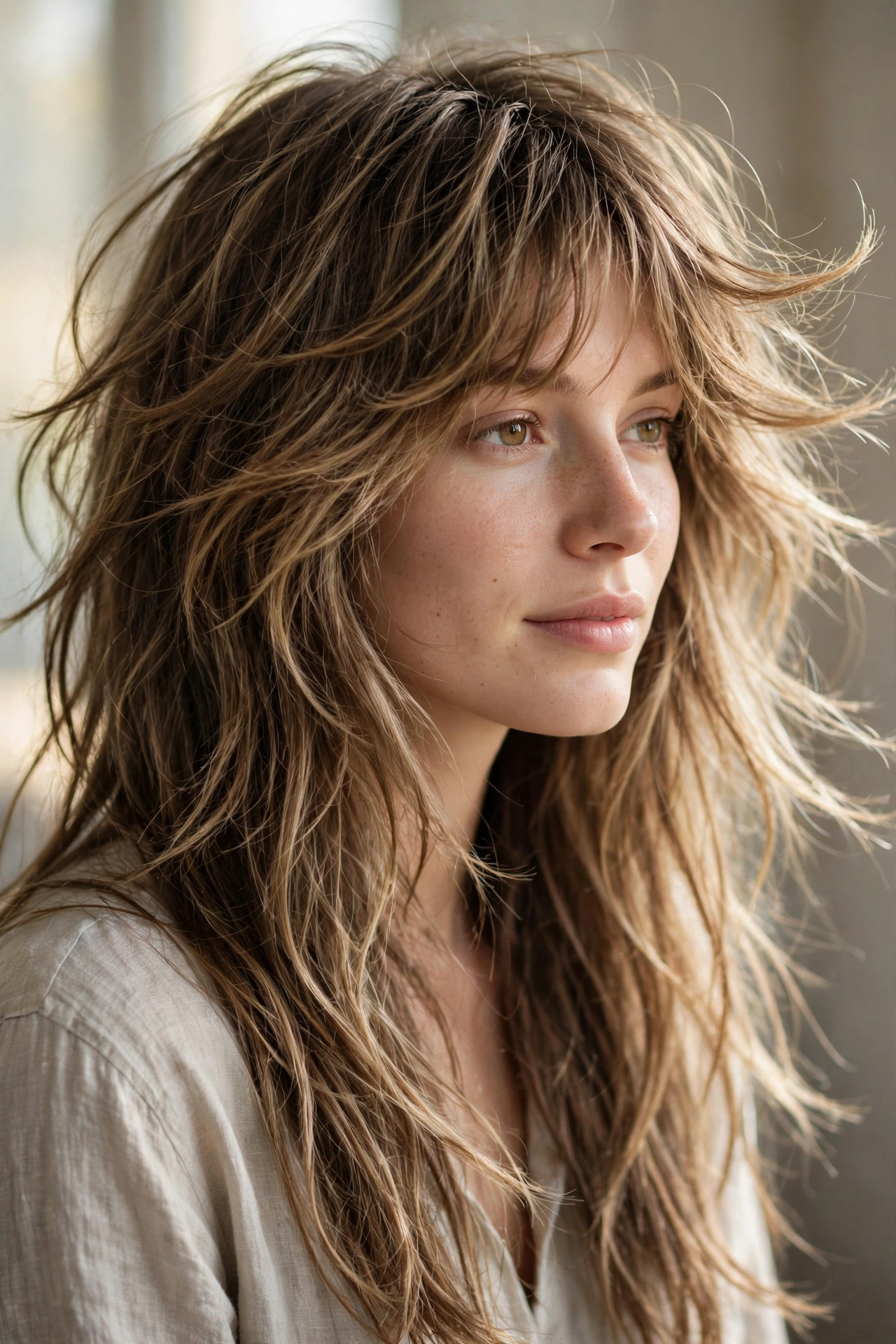
Think of this as the wolf cut’s gentler sibling — all the movement and airiness, none of the mullet drama. The layers are feathered and blended rather than chunky and disconnected, so the silhouette stays soft and romantic even as the crown keeps its lift. Naturally wavy and loosely textured hair wears this version best, since the waves do half the styling work for you. It’s especially flattering on oval and longer face shapes, where the softness around the cheeks adds width in all the right places.
Ask your stylist for long, blended layers with soft point-cut ends rather than harsh disconnection, and request face-framing pieces that start at the chin. This cut is gloriously low-maintenance: scrunch a curl-enhancing mousse into damp hair, diffuse on medium heat, and let the layers fall where they want. A light sea-salt spray adds grit on second-day hair. Because the layers are blended, you can stretch trims to ten or twelve weeks without the shape collapsing — the grow-out is one of the easiest in the business.
3. Long Wolf Cut with Face-Framing Layers
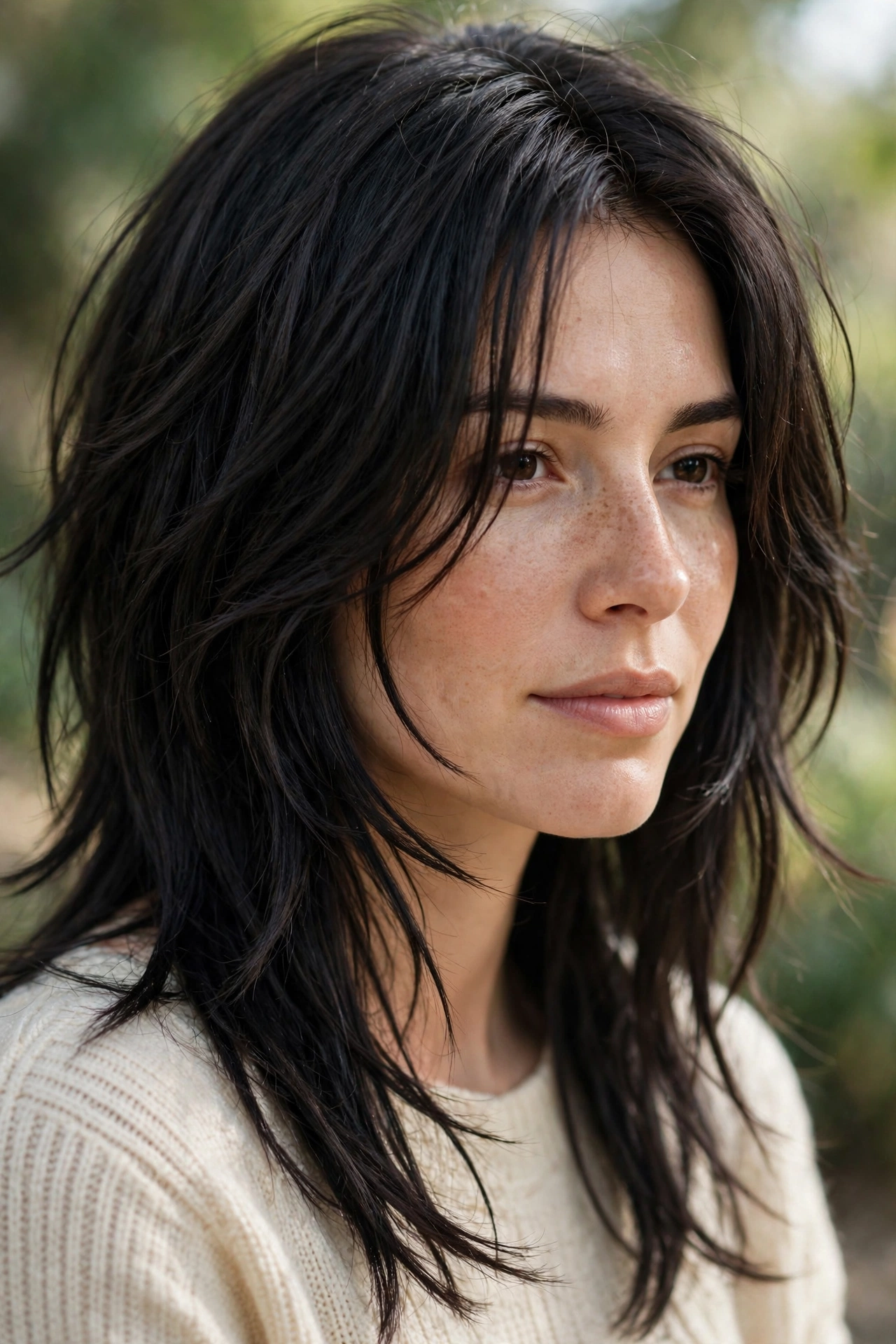
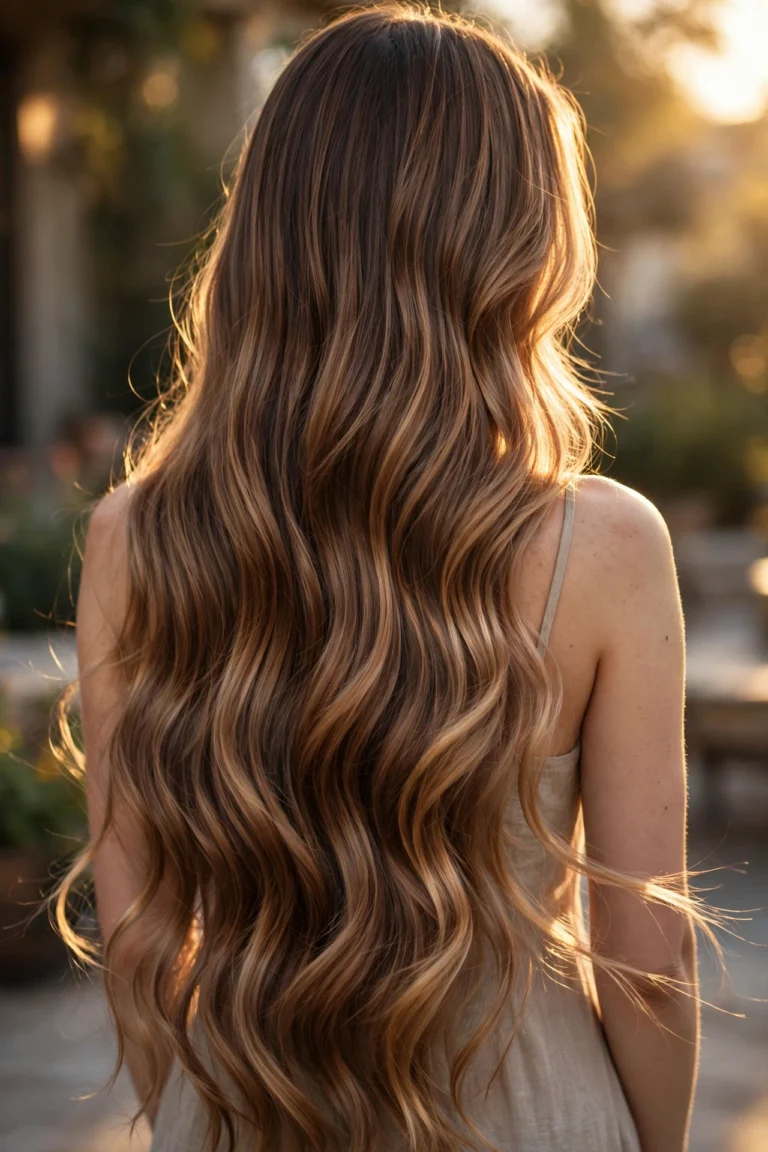
For those who refuse to lose their length, this version keeps everything past the shoulders while building the wolf’s signature movement into the top half of the hair. The layers begin around the cheekbones and cascade downward, so from the front you get all the face-framing drama while the back stays long and lush. Thick hair is the ideal candidate — the weight keeps long layers from puffing out. Long and oval faces get extra balance here, since the layers add width right where narrow faces need it.
Tell your stylist you want to preserve overall length while adding face-framing layers that begin at the cheekbones, with the shortest layer no higher than chin level. Ask for wispy, tapered ends rather than blunt cuts so the layers blend into the length. For styling, wrap large sections around a one-and-a-half-inch curling iron, alternating directions and flicking the ends outward for that feathery finish. Always use a heat protectant, and smooth a drop of argan oil through the mid-lengths to keep long layered ends from looking dry.
4. Curly Wolf Cut

Curls and the wolf cut are a match made in heaven — the cut’s built-in volume at the crown gives curly hair the lift it craves, while the tapered, longer ends prevent the dreaded triangle shape. Type 3 curls, from loose ringlets to tight corkscrews, get the most dramatic transformation: suddenly there’s shape, bounce, and a silhouette with intention. Round and square faces benefit enormously, because the vertical volume elongates the face while the face-framing curls soften strong jawlines.
This is one cut you should never get on wet, stretched hair — ask specifically for a dry curly cut so the stylist can see exactly where each curl will fall. Request shorter, rounded layers through the crown with length preserved underneath, and confirm your stylist is comfortable cutting curls individually rather than in straight sections. Style by raking curl cream through soaking-wet hair, scrunching in a light gel, and diffusing on low heat. Sleep in a pineapple or satin bonnet, and plan curly cuts every three to four months since curls disguise grow-out beautifully.
5. Korean-Inspired Soft Wolf Cut
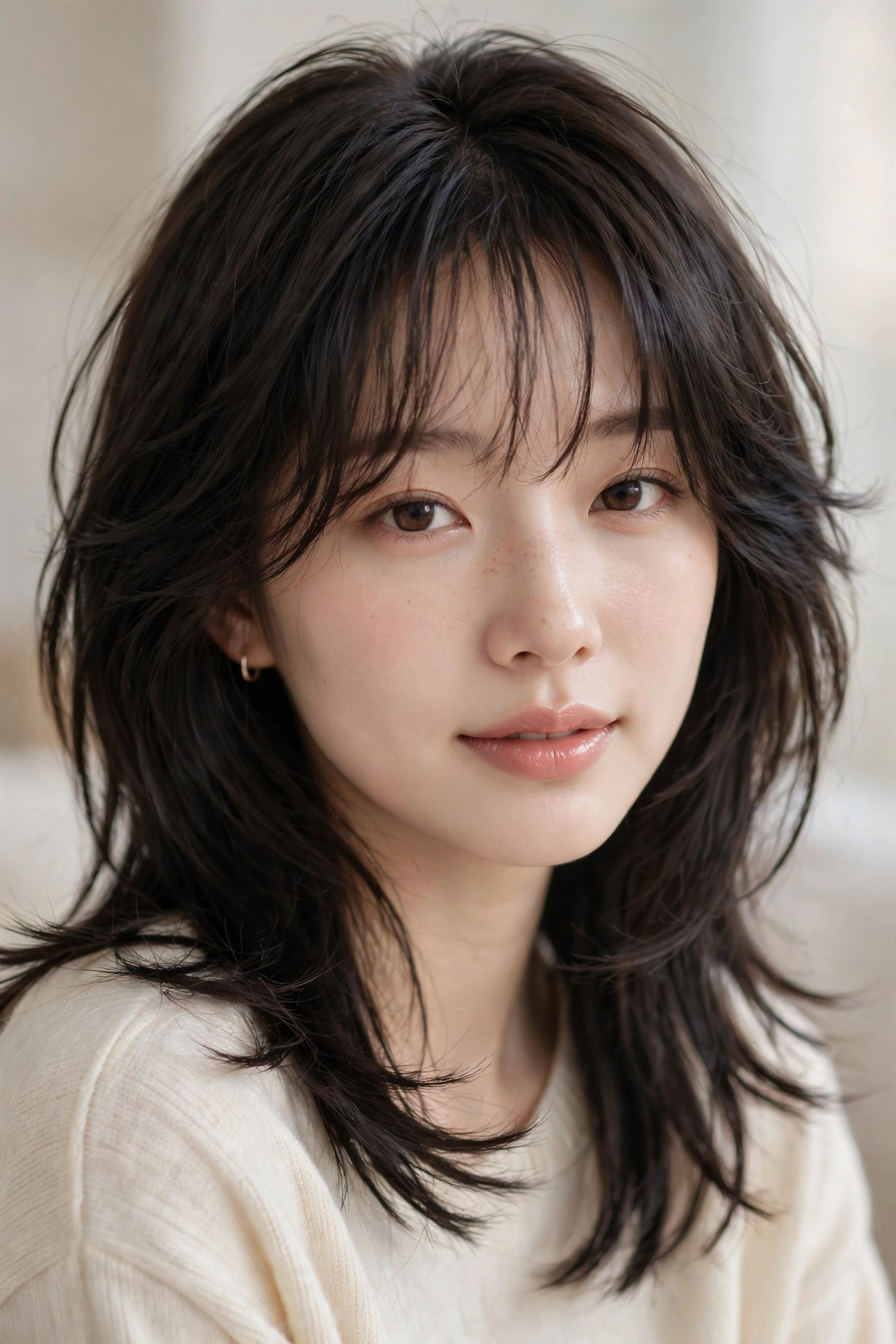
K-beauty has a way of taking bold trends and refining them into something impossibly soft, and the wolf cut is no exception. This version keeps the layered architecture but blends every transition until it’s nearly invisible — no chunky disconnection, just airy, feather-light layers that move like silk. Straight to slightly wavy hair shows off this technique best, since smooth strands reveal the seamless blending. Round and oval faces get a slimming effect from the wispy bangs and the way the layers fall inward along the cheeks.
Ask for soft, blended layering with “invisible” transitions — if your stylist does a lot of K-style cuts, they’ll know exactly what you mean. Request wispy see-through bangs that graze the eyebrows and longer face-framing pieces that curve inward. The signature styling is a bouncy blowout: use a large round brush to curl everything under and inward, finishing with a cool shot to set the curve. A lightweight shine serum keeps the finish glassy. Trims every eight weeks maintain the delicate bang shape.
6. Choppy Textured Wolf Cut
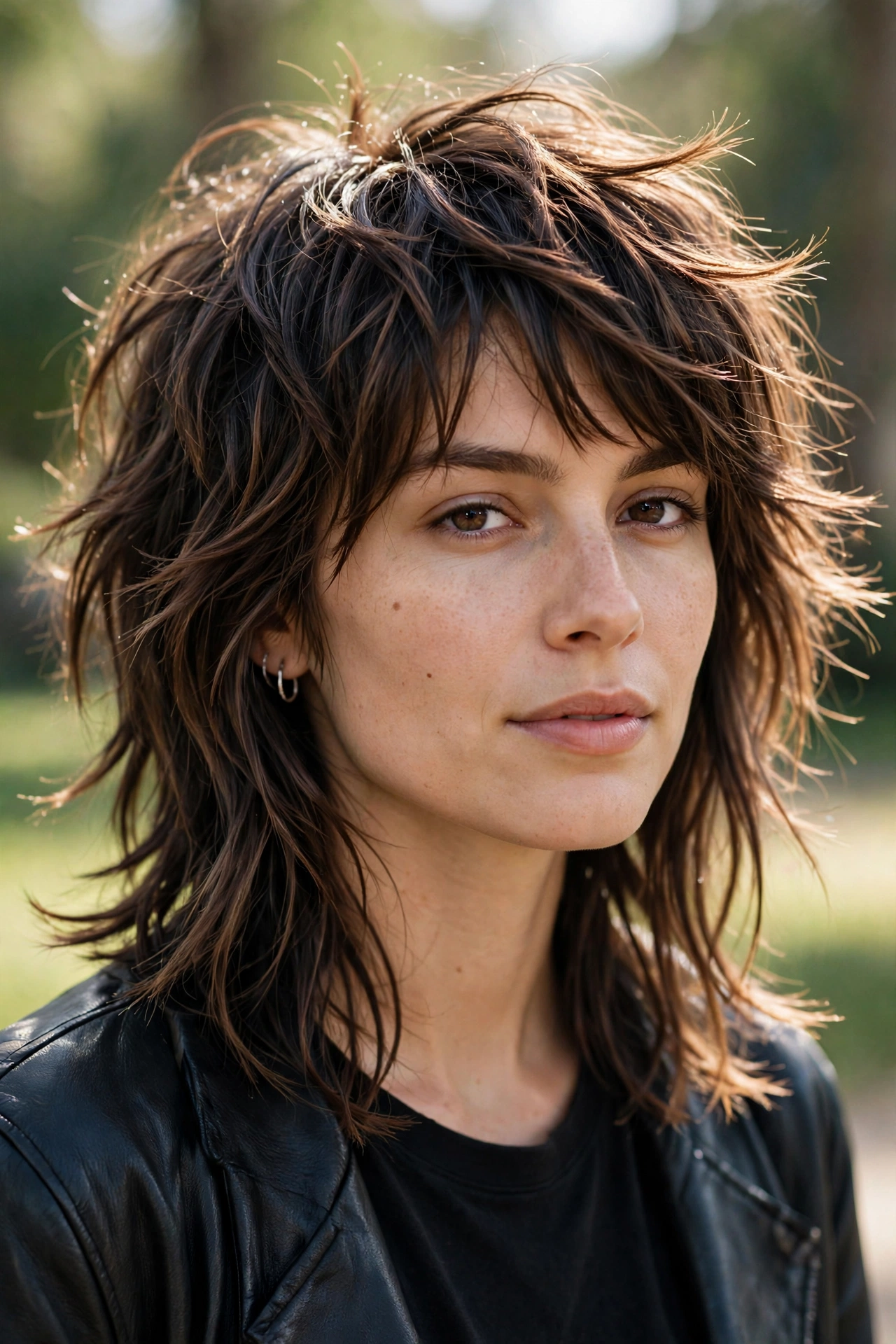
If the soft versions feel too polite, this is the wolf cut with its edge fully intact. The layers are deliberately piecey and uneven — point-cut, notched, and separated so each chunk reads as its own statement. Straight hair shows off this texture best, because every snipped piece is visible rather than swallowed by wave or curl. It suits confident dressers and anyone with an edgier wardrobe, and it flatters oval and heart-shaped faces by adding width and attitude around the cheekbones.
Ask for point-cut ends and intentionally disconnected layers, and be specific that you want visible texture rather than blended softness — bring photos of the exact chunkiness you want. Maintenance is the trade-off: piecey cuts lose their definition as they grow, so book trims every four to six weeks. For daily styling, warm a matte paste or texturizing cream between your palms and twist individual pieces to define them. Less is more with product; you want separation and grit, not a crunchy, overworked finish.
7. Wolf Cut with Wispy Baby Bangs
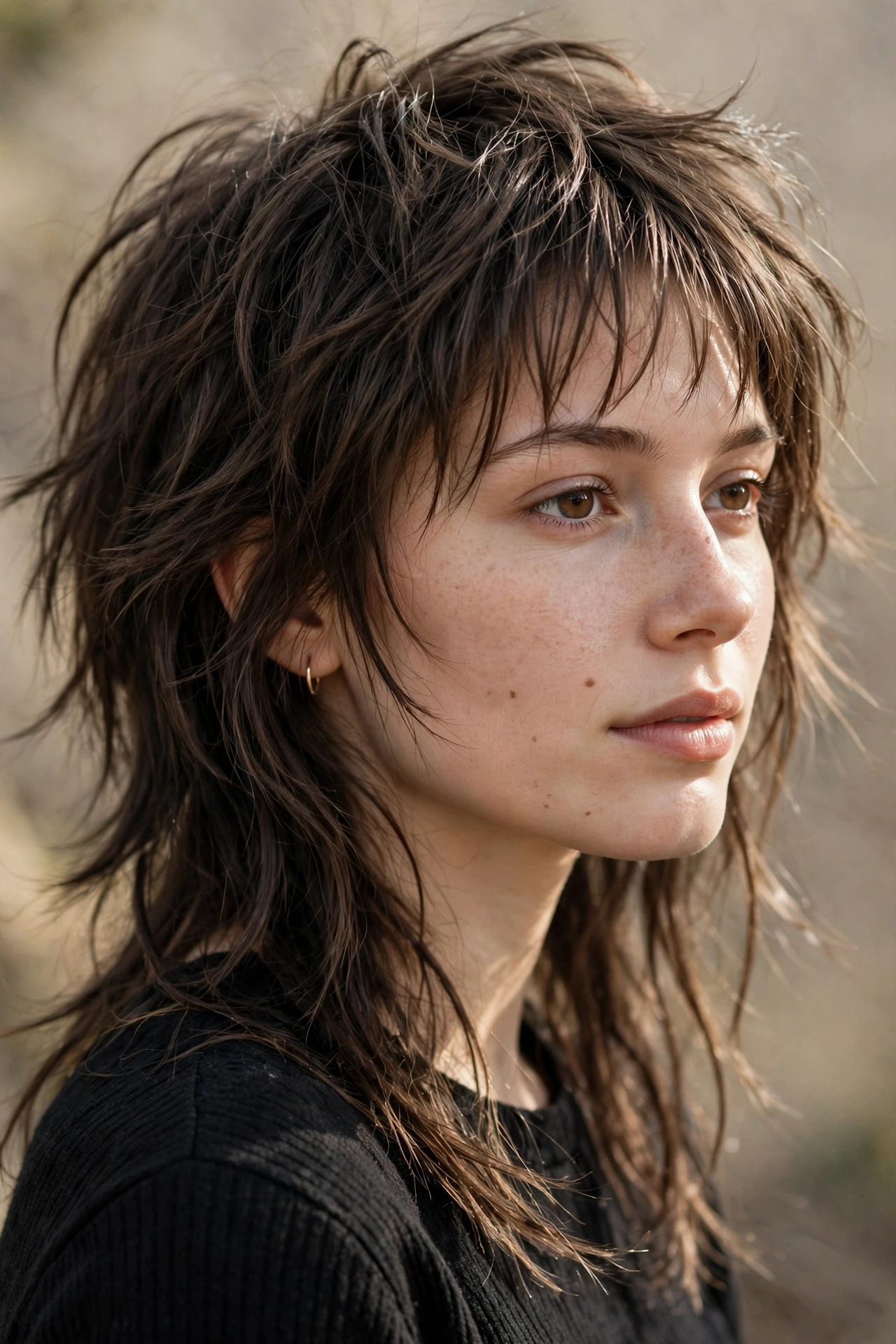
Baby bangs change the entire personality of a wolf cut, shifting it from rocker to art-school cool in a single snip. These short, feathery bangs sit well above the brows and pair perfectly with the shag’s wild layers — the contrast between the precise fringe and the undone lengths is what makes it work. Higher foreheads are the natural home for this style, and long or oval faces get welcome horizontal balance. Fine to medium hair keeps the wispy texture light instead of heavy.
Request wispy, textured baby bangs — emphasize “wispy” over “blunt,” since a heavy straight-across fringe fights the shag’s looseness. The bangs should be cut dry and sit about an inch above the brows to allow for natural movement. Style them with a small round brush or even just your fingers and a touch of styling cream, directing them forward and slightly to the side. Keep up with bang trims every three weeks, or learn to dust the ends yourself between appointments with proper hair-cutting shears — never craft scissors.
8. ’90s-Inspired Wolf Cut
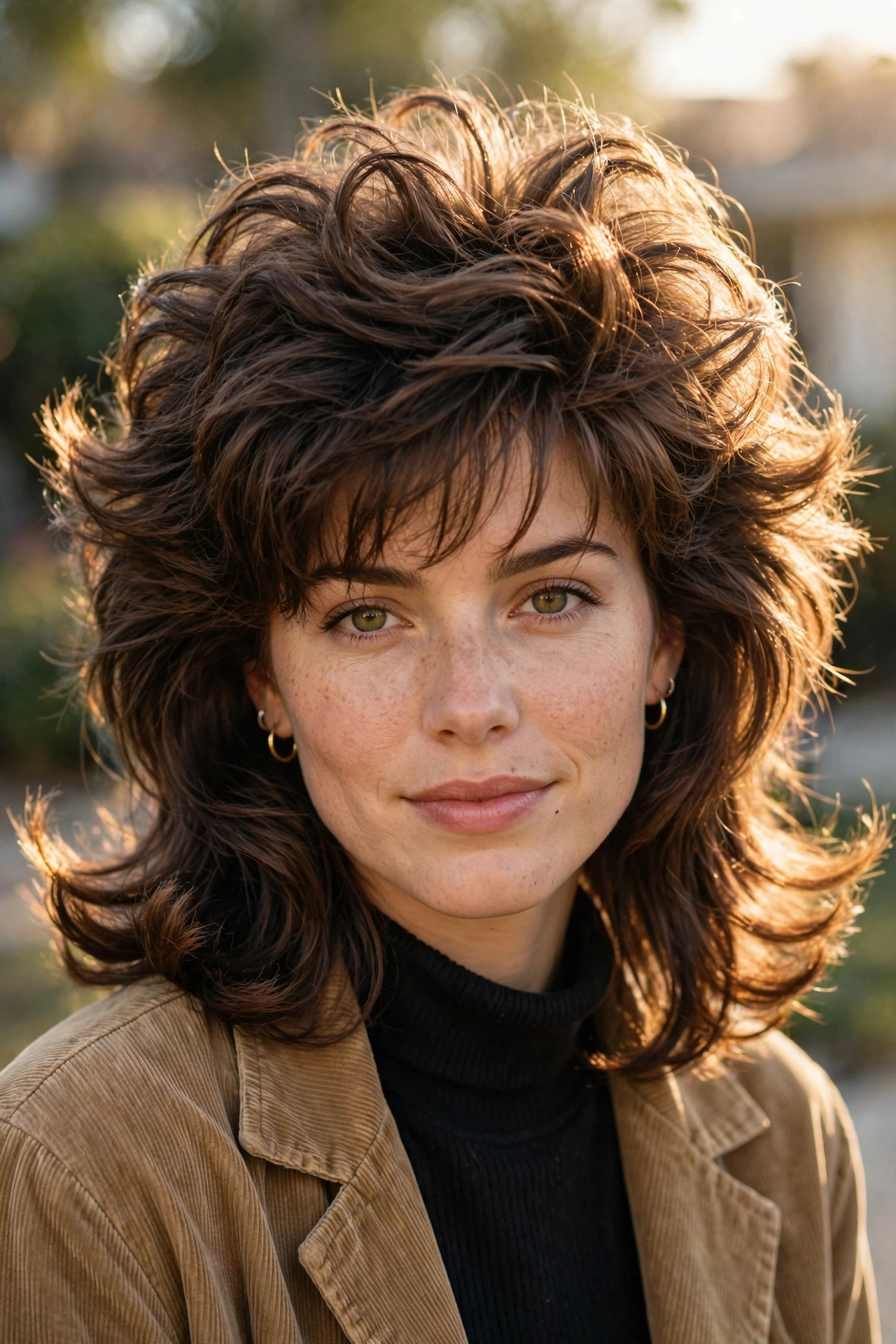
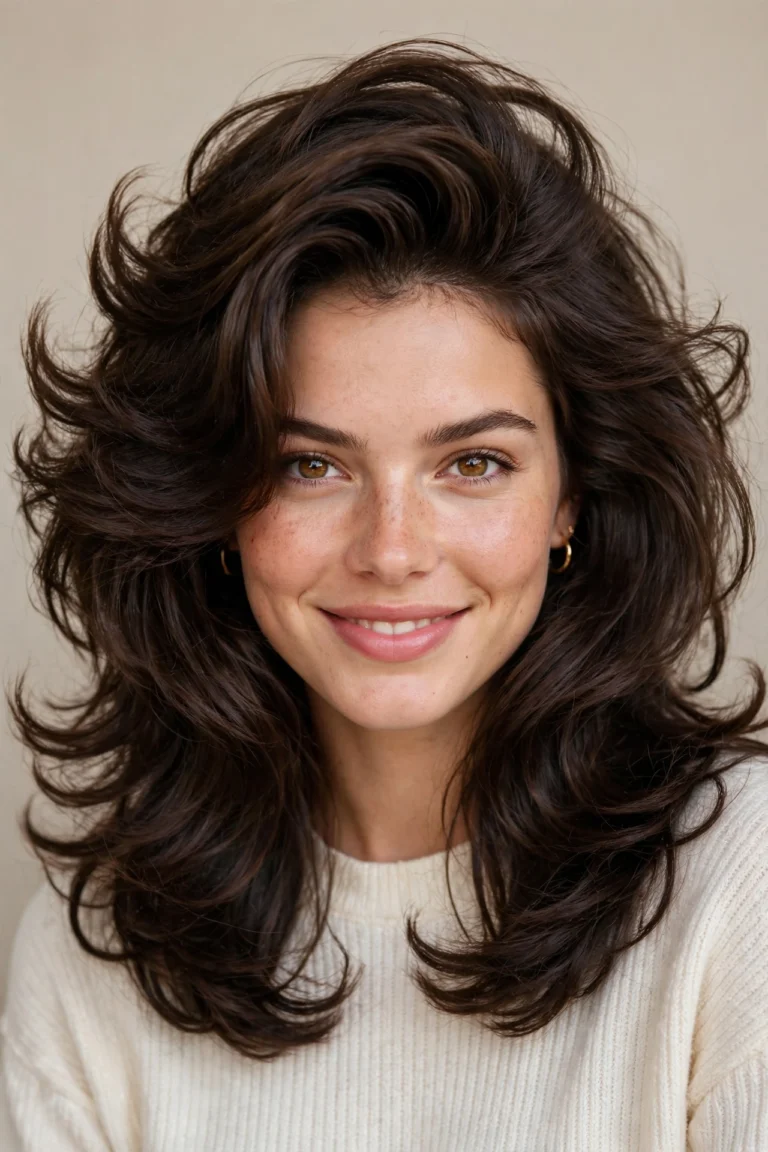
This version leans into the decade that invented big-hair energy: fuller, bouncier, and unapologetically voluminous. The layers are chunkier and the silhouette rounder than the modern wispy wolf, channeling supermodel blowouts and sitcom-star volume. Medium to thick hair carries this look best — fine hair can struggle to hold the fullness without significant product. It’s universally flattering because the face-framing layers can be customized to any face shape, and the flipped-out ends add a playful retro finish.
Ask for heavy face-framing layers and chunky interior layers with the ends flipped outward — reference photos of ’90s blowouts will communicate the volume level instantly. The styling is where this cut shines: apply volumizing mousse at the roots, blow-dry with a large round brush, and set the top sections in Velcro rollers while you do your makeup. Finish with a flexible-hold hairspray and a volume powder at the crown. This is a higher-effort style, so be honest with yourself about your morning routine before committing.
9. The Wolf Bob (Short Wolf Cut)
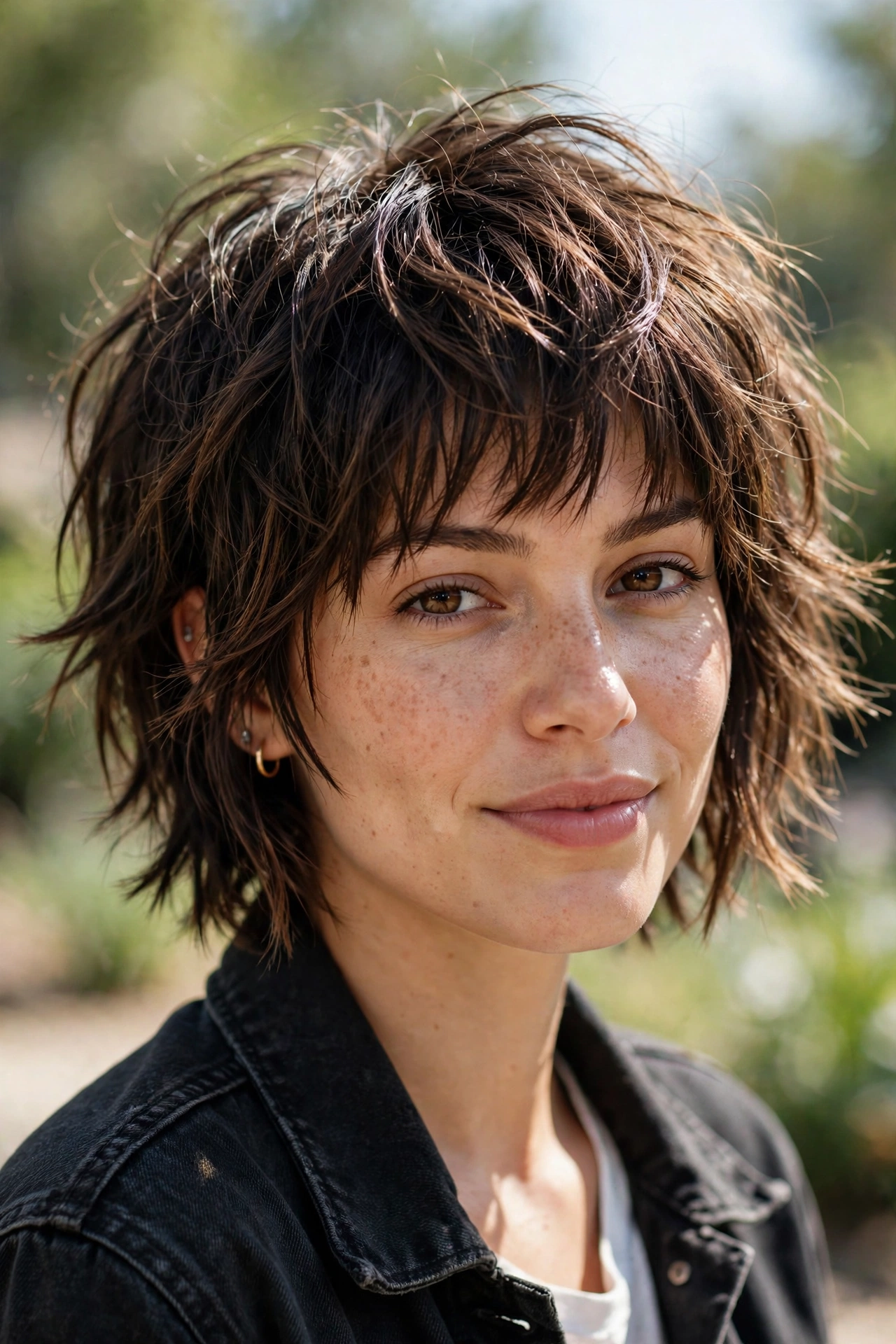
The wolf bob proves you don’t need length to get the attitude — this cropped version packs shaggy, choppy layers into a jaw-to-neck-length shape with a slightly longer, piecey nape. It’s bold, fashion-forward, and surprisingly wearable, reading more “cool French bob” than costume when the layers are done right. Thick, wavy hair is the dream texture here, since the natural body fills out the shape. Oval, square, and heart-shaped faces all work, as the cropped length draws attention to cheekbones and eyes.
Ask for a bob-length cut with shag layering through the crown and a tapered, slightly longer nape — the mullet whisper at the back is what makes it a wolf rather than just a shaggy bob. Specify lots of texture through the ends so it never looks blunt or heavy. Style with a dime-sized amount of texturizing cream scrunched in, and don’t be afraid to tuck one side behind your ear for asymmetry. Short shags grow out fast, so plan trims every five to six weeks to keep the nape neat.
10. Wolf Cut with Chunky Highlights
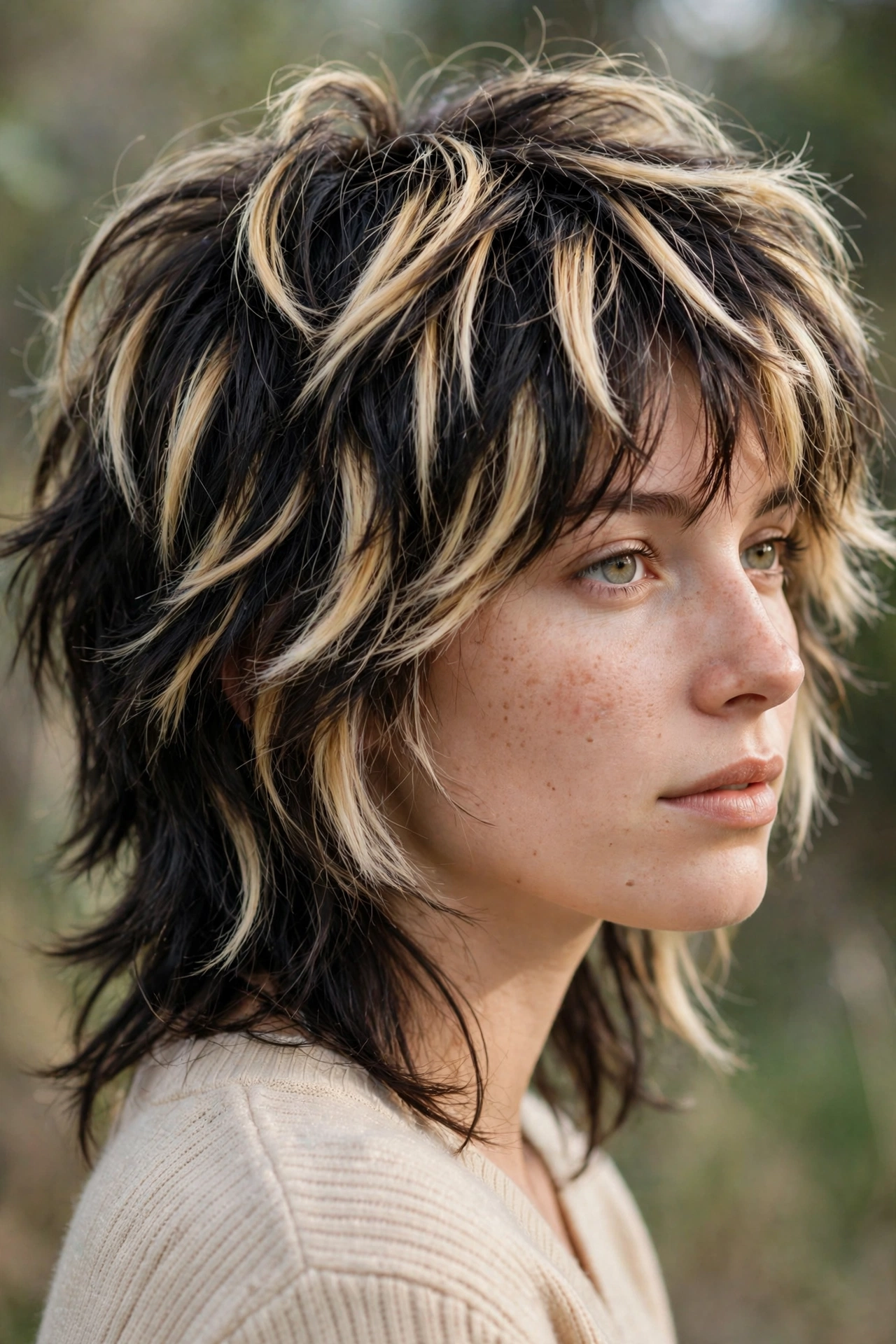
Color is the fastest way to make a wolf cut look custom, and chunky highlights are having a major moment — think bold, face-framing ribbons of blonde over a dark base rather than subtle babylights. The contrast makes every layer visible, so the cut’s architecture practically glows. This works on straight or textured hair, though sleeker strands show the color placement most clearly. Warm and neutral skin tones glow against golden chunky pieces, while cooler blondes suit pink undertones.
Ask for three to four chunky foils framing the face plus a few scattered through the interior layers — the placement should follow your part so the brightness lands where the light hits. Request a gloss or toner to keep the blonde dimensional rather than flat. At home, switch to sulfate-free shampoo, use a purple mask once a week if the blonde leans cool, and book gloss refreshes every six to eight weeks since chunky highlights show regrowth faster than blended color. A heat protectant is non-negotiable on lightened ends.
11. Messy Bedhead Wolf Cut
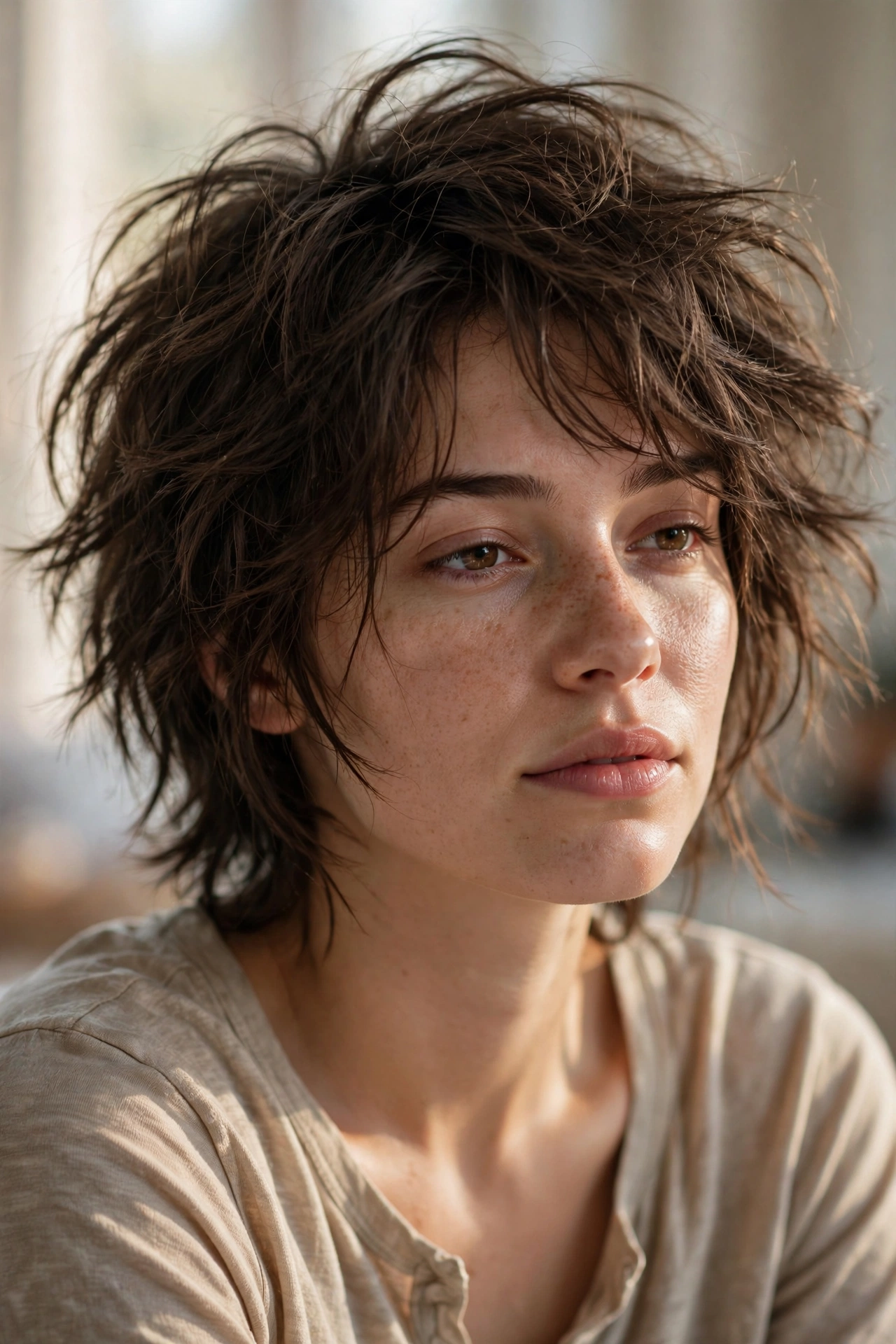
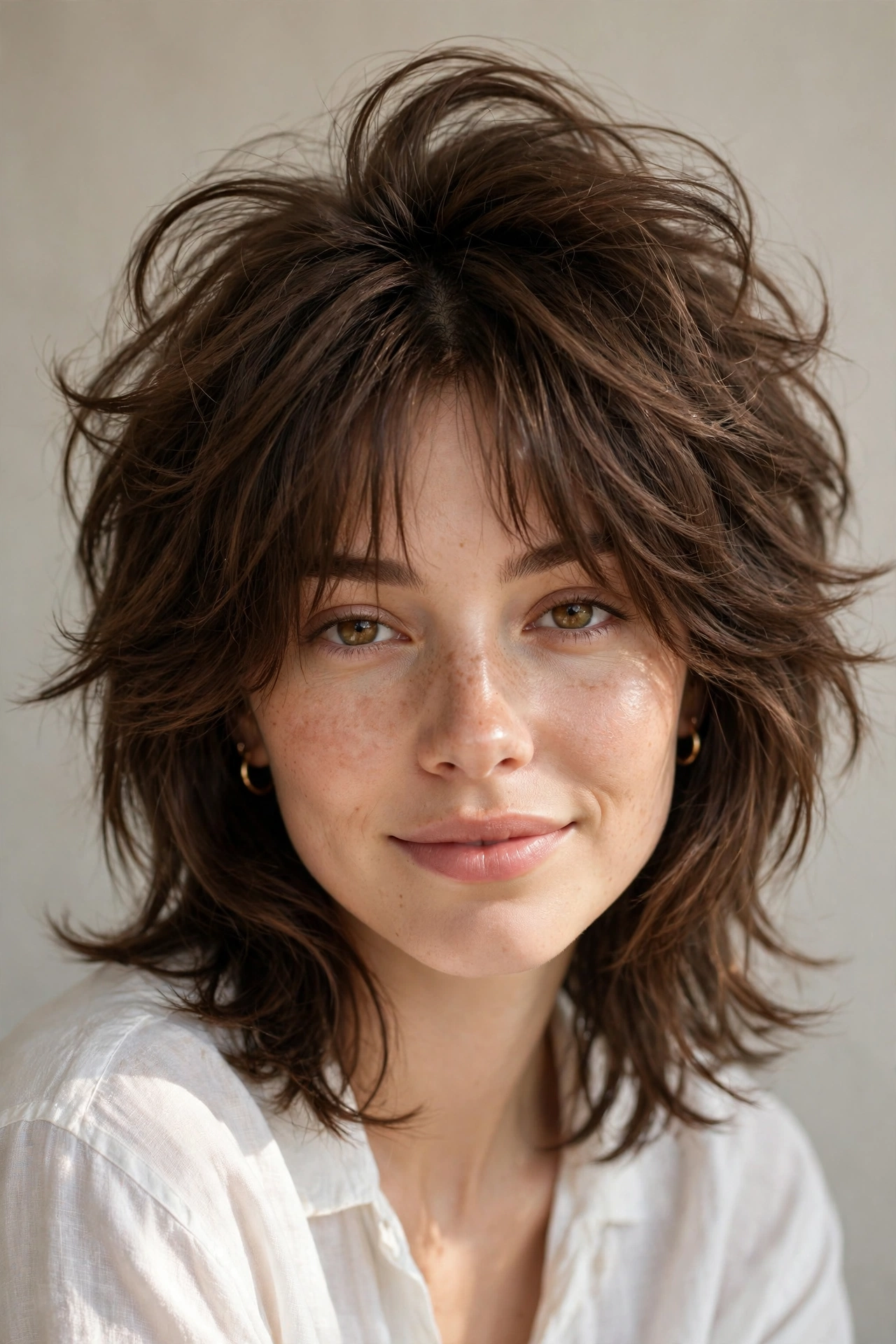
This is the wolf cut for people who want to look like they woke up perfect — which, with the right cut, is almost achievable. The layers are heavily textured and the finish deliberately undone, so the style’s whole point is controlled chaos. Wavy and thick hair types get here fastest, since their natural texture already leans tousled. It suits a casual, creative aesthetic and flatters most face shapes because the irregular pieces break up symmetry in a flattering, face-slimming way.
Ask for maximum internal texture and long, shattered layers, telling your stylist you want a cut designed to look best on day-two hair. The styling routine is refreshingly lazy: braid damp hair loosely before bed, undo it in the morning, and mist with dry texture spray while scrunching. Skip the brush entirely — fingers only. A tiny bit of pomade on the ends adds piece-y definition. Wash less often if your scalp allows it, since the lived-in texture is the whole point, and refresh the shape with a trim every eight to ten weeks.
12. Wolf Cut with Side-Swept Bangs
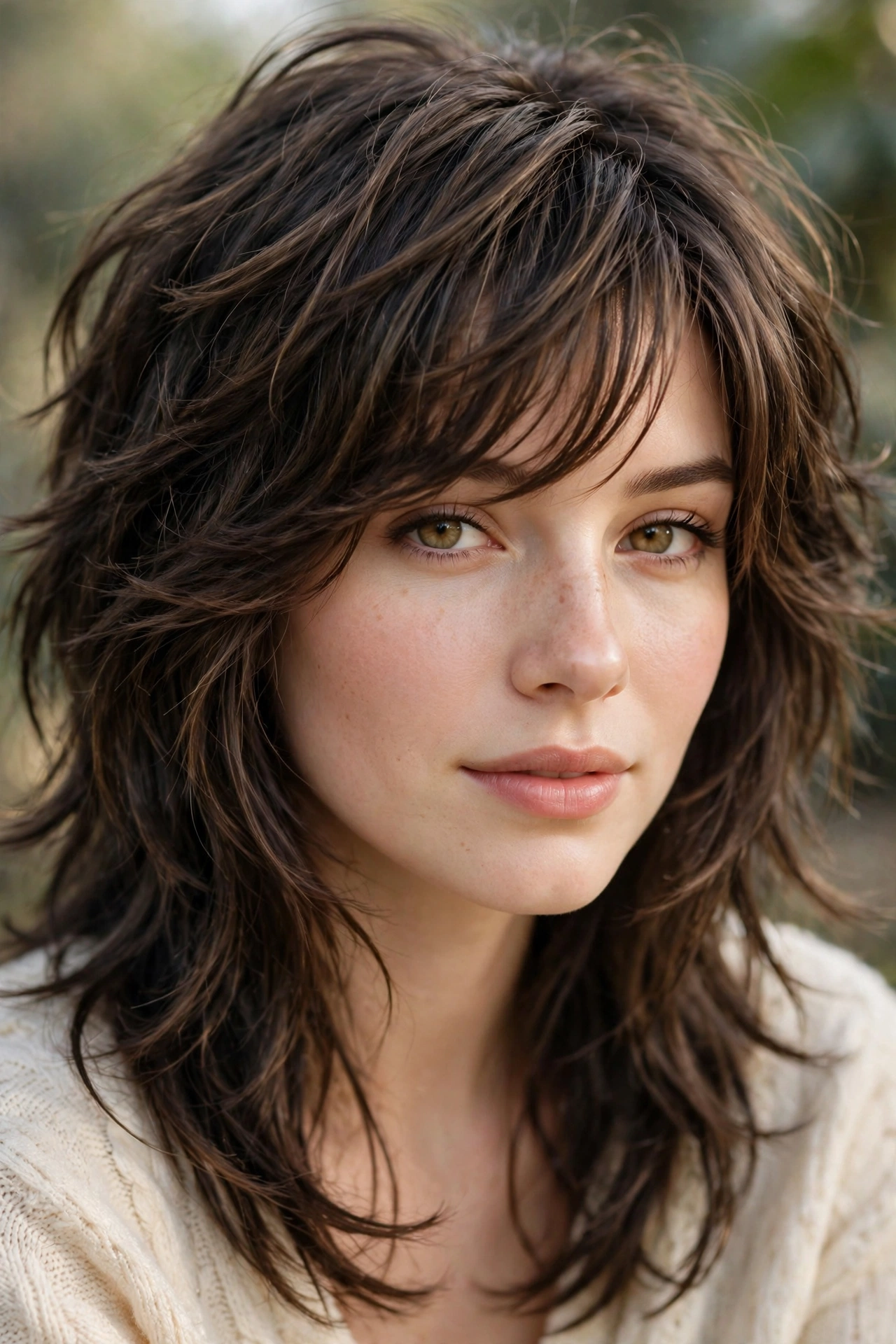
Side-swept bangs bring a softer, more romantic energy to the wolf cut’s edge — the diagonal line across the forehead is one of the most flattering tricks in hairstyling. It visually slims round faces, softens square jawlines, and adds asymmetry that keeps the look interesting from every angle. This version works across hair textures, though wavy hair gives the sweep natural movement. It’s also the most office-friendly wolf variation if you need your haircut to behave in professional settings.
Request a long side-swept bang that blends into the face-framing layers, cut on dry hair so the stylist can see the natural fall. The bang should be long enough to tuck behind your ear on days you want it out of the way. Style by blow-drying with a deep side part, using a round brush to sweep the bang across the forehead and flick the ends outward. A light-hold hairspray keeps the sweep in place without stiffness. Trim the bangs every four to five weeks to maintain the sweeping length.
13. Layered Wolf Cut for Thick Hair
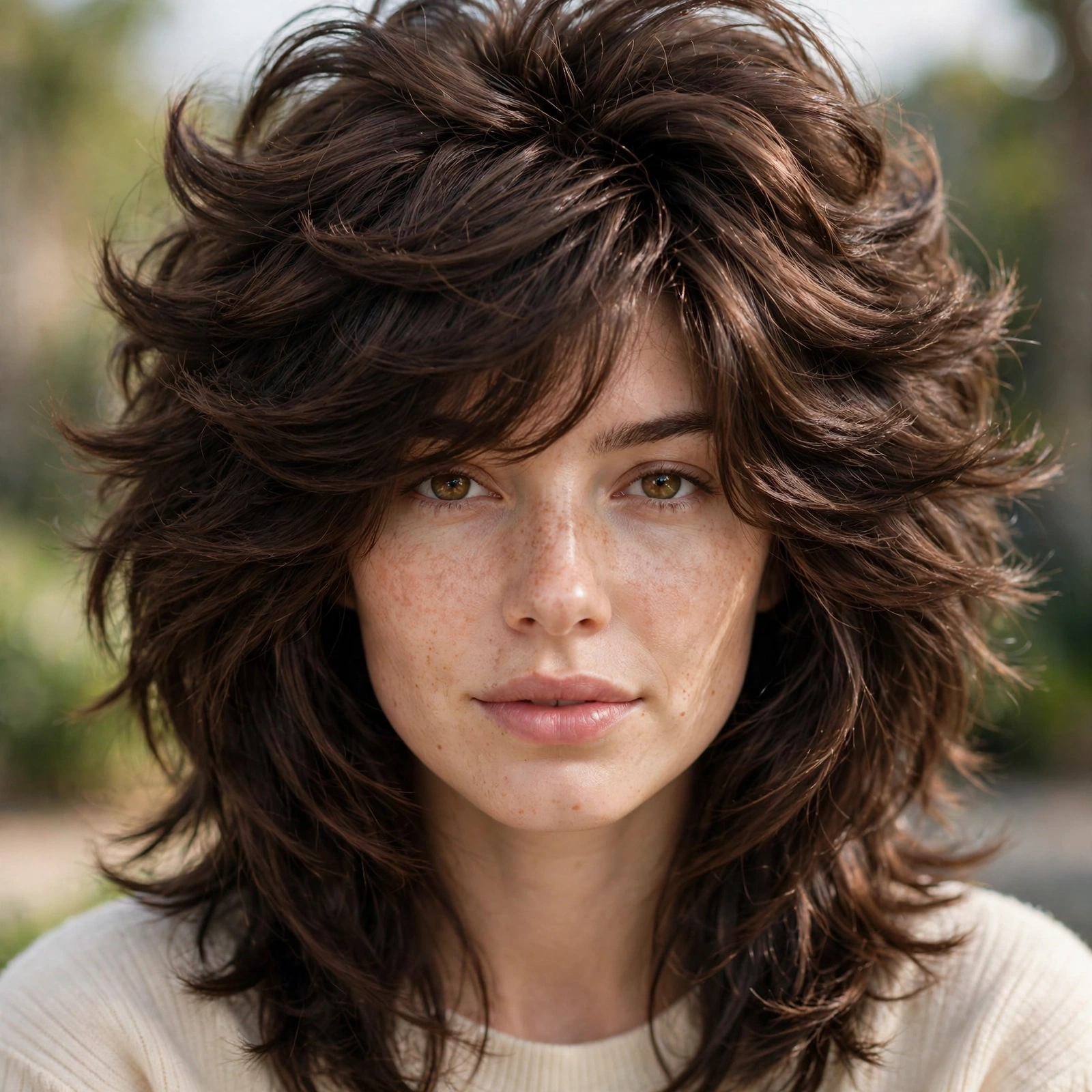
Thick hair and wolf cuts are natural partners, but only when the cut actively removes weight — otherwise you get bulk instead of movement. This version uses long interior layers and strategic thinning to let thick hair move, flip, and breathe. The result keeps all the density you love while eliminating the heavy, helmet-like feeling thick hair can have. It’s ideal for anyone whose hair eats regular layered cuts for breakfast and still looks one-length by week three.
Be explicit with your stylist: ask for interior layers and weight removal through the mid-lengths and ends, and confirm they’re comfortable using thinning shears or slide-cutting on thick hair. The crown layers should be shorter for lift while the perimeter keeps its length. At home, a smoothing serum applied to damp hair tames frizz, and blow-drying with a round brush in sections gives the layers definition. Avoid heavy oils that weigh the layers down, and schedule trims every eight weeks before the weight creeps back.
14. Volume-Boosting Wolf Cut for Fine Hair
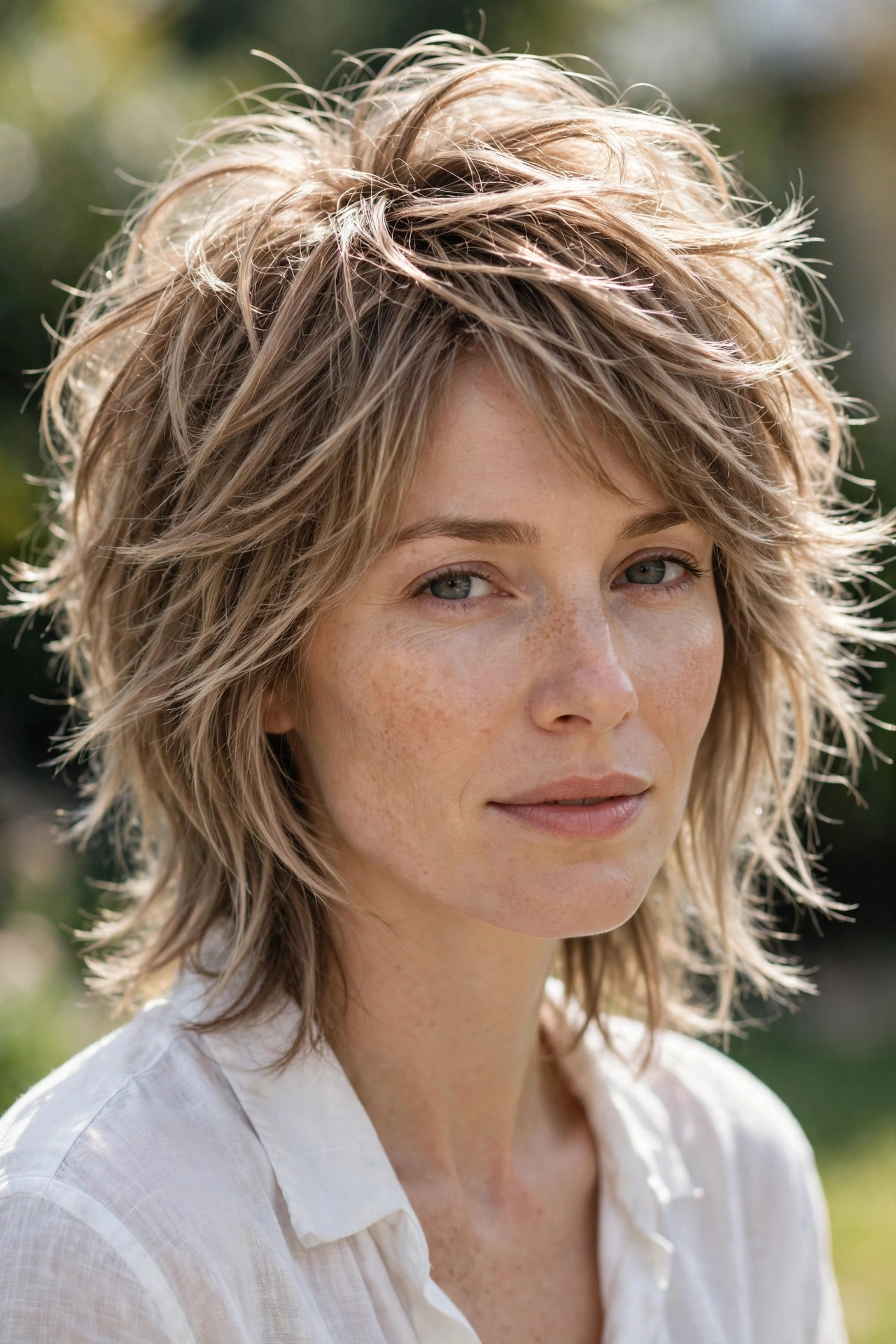
Fine hair can absolutely wear a wolf cut — it just needs a different blueprint. Instead of removing weight, this version builds it: shorter layers through the crown create the illusion of density, and the textured ends make fine strands look fuller than they are. The key is restraint — over-thinning fine hair is the fastest way to make it look thinner. Oval and heart-shaped faces get lovely balance from the crown volume, and the cut adds body that fine hair rarely achieves on its own.
Ask for shorter crown layers for lift and light, minimal texturizing — specifically tell your stylist to go easy on the thinning shears. Keeping the perimeter slightly fuller prevents the ends from looking wispy. For styling, apply a root-lifting mousse to damp roots and blow-dry upside down, then flip upright and rough up the crown with your fingers. A sprinkle of volumizing powder at the roots adds grip and fullness that lasts all day. Because fine hair shows grow-out quickly, book trims every six weeks.
15. Ash Blonde Wolf Cut
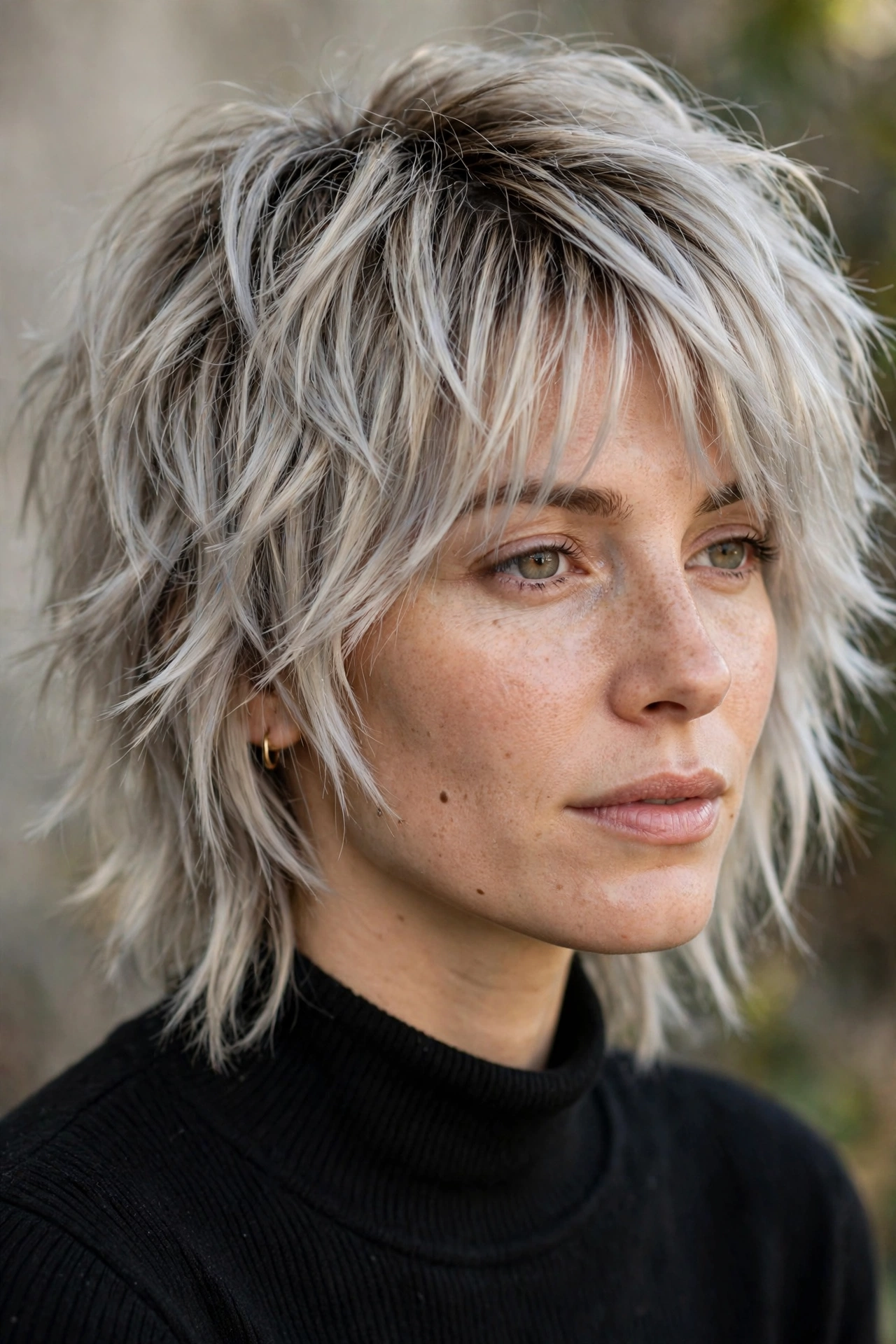
There’s something about cool, smoky blonde against choppy shag layers that reads impossibly chic — the ashy tone mutes the cut’s wildness into something editorial and refined. This color works best on cool and neutral skin undertones, where the icy blonde enhances rather than washes out the complexion. The dimensional, multi-tonal nature of ash blonde also makes every layer of the wolf cut visible, turning the haircut’s texture into a color story. It’s a statement, but a sophisticated one.
Getting here usually means lifting to a level nine or ten, so ask for foils or balayage followed by an ash toner — and be honest about your hair’s history, since previous color affects the lift. At home, purple shampoo once or twice a week keeps brass at bay, and a bond-building treatment protects lightened ends. Book toner refreshes every four to six weeks, because ash tones fade faster than warm ones. Keep heat styling minimal and always protected; bleached, layered ends are the first to show damage.
16. Copper Wolf Cut
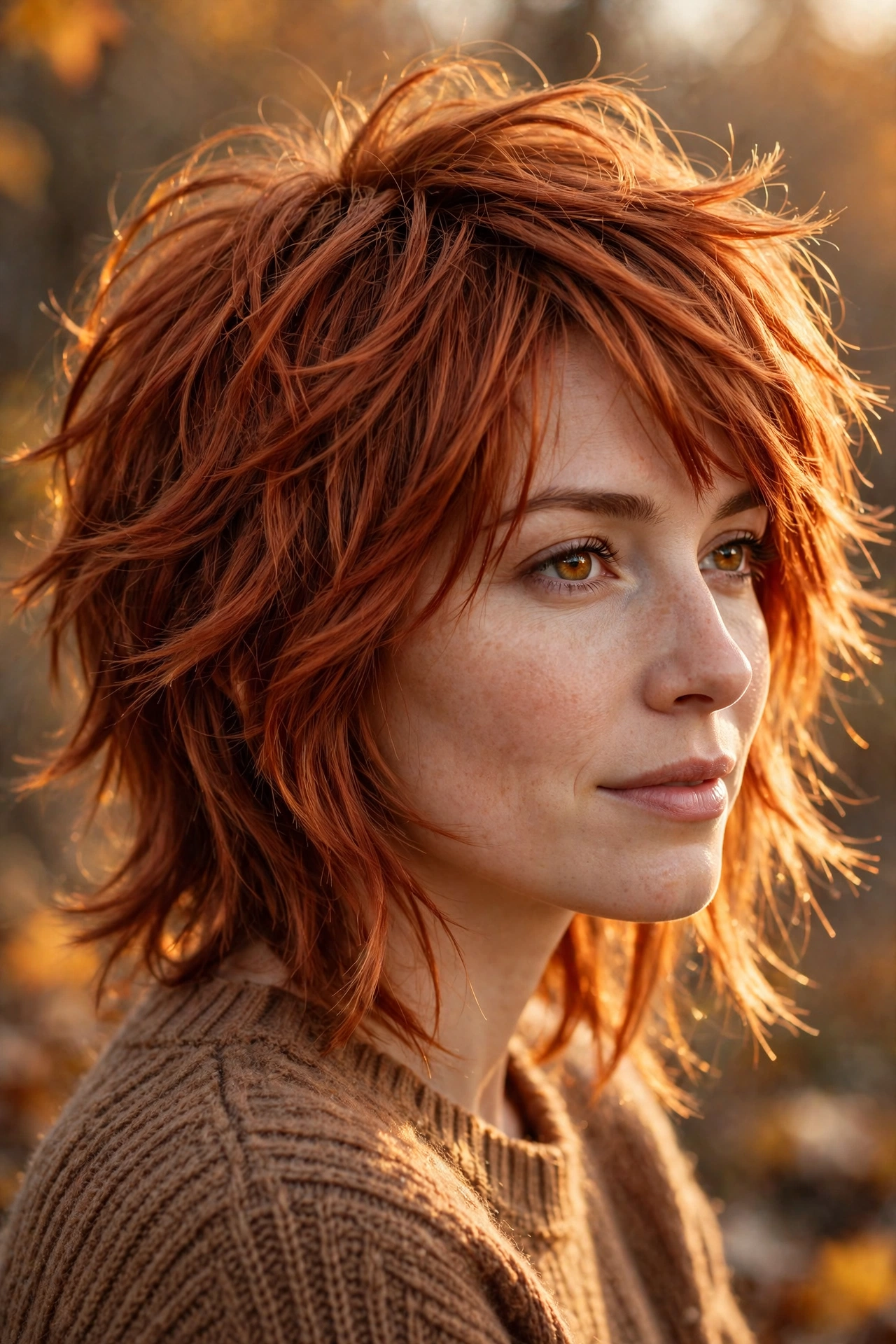
If ash blonde is the cool sophisticate, copper is the warm extrovert — rich, fiery, and guaranteed to turn heads. The wolf cut’s feathered, flicked-out ends show off copper’s dimensional range beautifully, catching light in every layer from deep auburn roots to bright penny ends. Warm and neutral undertones glow against copper, and fair to medium skin tones get a lit-from-within warmth. It’s the highest-impact color pairing on this list, and it photographs like a dream.
Ask for a rich copper base — either a single-process color or copper balayage for dimension — and discuss maintenance honestly, because copper is notorious for fading fast. Use color-safe, sulfate-free shampoo, wash in cool water, and expect a gloss refresh every four to six weeks to keep the vibrancy. A color-depositing conditioner in copper between appointments extends the life significantly. Style with lightweight products that won’t dull the shine, since copper’s magic is all in its reflective, dimensional glow.
17. Half-Up Wolf Cut Styling

The wolf cut’s layered chaos actually makes it perfect for half-up styling — the shorter crown pieces create natural volume in the pulled-back section while the longer lengths flow free underneath. This works on medium to long wolf cuts and instantly elevates the look for events, dates, or days when you want polish without losing the cut’s personality. The face-framing layers left loose around the cheeks keep it soft and romantic rather than severe, flattering virtually every face shape.
Section the top third of your hair from temple to temple, gently backcomb the crown section for lift, then twist or smooth it back and secure with a claw clip, elastic, or decorative barrette. Pull a few face-framing pieces loose around the cheeks and tug gently at the crown for that effortless volume. A mist of texturizing spray before pinning gives fine hair the grip it needs, and a light flexible-hold hairspray keeps everything in place. For evenings, curl the loose lengths with a large barrel iron for extra polish.
The beauty of the wolf cut is that there’s no single “right” version — only the version that fits your texture, your face shape, and the amount of effort you’re willing to give it on a busy morning. Whether you go classic with curtain bangs, soft and Korean-inspired, or bold with copper color, the cut rewards confidence and a light hand with product. Save your favorite ideas from this list, bring them to a stylist who understands textured cutting, and don’t be afraid to make it yours. Great hair isn’t about following the trend perfectly — it’s about wearing it like you invented it.